


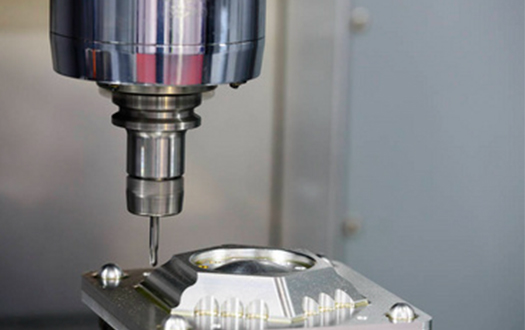
CNC machining aluminum battery housings for EV and energy storage systems helps manufacturers build strong, light, and accurate protection for battery cells and electronic parts.
Effective thermal management is important because battery temperature affects charging speed, service life, and safety.
However, many manufacturers face problems with thin-wall distortion, poor sealing, tight tolerances, and long production lead times.
A battery enclosure must also support electrical insulation, vibration resistance, and reliable heat transfer.
Surface treatment, leak testing, and corrosion protection can further affect the final performance of an aluminum housing.
When a housing must meet an IP67 protection target, even a small machining error or damaged seal can cause product failure.
Introduction
Summary Answer
CNC machined aluminum battery housings are a strong choice for electric vehicles and energy storage systems because aluminum offers low weight, good thermal conductivity, corrosion resistance, and high dimensional accuracy. A reliable supplier should control material grade, wall thickness, flatness, hole position, sealing surfaces, surface finish, and inspection records. The best process combines 3-axis or 5-axis CNC machining, controlled fixturing, deburring, surface treatment, leak testing, and final measurement with calibrated equipment.
Why Use CNC Machining for Aluminum Battery Housings?
-
High dimensional accuracy
CNC machining can produce mounting holes, sealing grooves, cooling channels, and connector openings with repeatable dimensions. For many battery housing projects, a general tolerance of plus or minus 0.05 mm is practical. Critical holes and sealing features may require tighter control after design review.
-
Low weight with useful strength
Aluminum is lighter than steel. Aluminum 6061-T6 has a density of about 2.70 g/cm3. This supports weight reduction in EV battery packs while maintaining useful mechanical strength. Lower housing weight can help increase vehicle range or allow more space for battery cells.
-
Good heat transfer
Aluminum 6061 has thermal conductivity of about 167 W/m-K. Aluminum 5052 has thermal conductivity of about 138 W/m-K. These values help transfer heat from battery cells to cooling plates, thermal pads, or external cooling structures.
-
Fast design changes
CNC machining does not need a hard mold for each design change. Engineers can update the CAD model and CAM program before a new batch. This is useful for prototype battery boxes, pilot production, and low-volume energy storage projects.
-
Complex internal features
A CNC machine can create pockets, ribs, cable channels, threaded holes, and gasket grooves in one controlled process. A 5-axis machine can reduce the number of setups for complex housings and improve positional accuracy between related surfaces.
Common Aluminum Grades for Battery Enclosures
| Aluminum grade | Typical use | Advantages | Important limits |
|---|---|---|---|
| 6061-T6 | Structural battery trays, covers, brackets, and cooling plates | Good machinability, strength, corrosion resistance, and availability | Welding can reduce strength in the heat-affected area |
| 5052-H32 | Thin covers, formed panels, and corrosion-resistant housings | Good corrosion resistance and forming performance | Lower strength and more difficult machining than 6061 |
| 7075-T6 | High-strength brackets and selected structural parts | High strength-to-weight ratio | Higher cost and lower corrosion resistance than 6061 |
| 6082-T6 | European structural parts and larger machined frames | Good strength and machinability | Material supply and finish requirements must be confirmed |
Material selection depends on load, corrosion exposure, cooling needs, joining method, and target cost. The drawing should state the alloy, temper, material certificate requirement, and surface treatment. Mixing aluminum grades in one project without engineering review can create different corrosion and strength results.
Key Design Requirements for EV and Energy Storage Battery Housings
-
Control wall thickness and distortion
Thin walls reduce weight but can move during machining. A wall thickness of 2.0 to 3.0 mm may be possible for selected 6061-T6 parts, but the final value depends on size, depth, fixturing, and load. Larger flat panels often need ribs or local bosses to control deflection.
Machining should remove material in balanced stages. Roughing, stress release, semi-finishing, and finishing can reduce movement on large aluminum parts.
-
Protect sealing surfaces
Battery covers often use silicone, EPDM, or other elastomer gaskets. The gasket groove must have controlled width, depth, corner radius, and surface finish. A practical sealing surface may require an Ra value around 1.6 to 3.2 micrometers, depending on the gasket and design.
Sharp corners can cut the gasket. Machined burrs can create leak paths. The drawing should define edge breaks, groove details, and inspection points.
-
Plan thermal paths
Battery cells produce heat during charging and discharging. The housing can include flat contact areas for thermal pads, cooling channels, or liquid cold plates. Flatness is often more important than general part tolerance in these areas.
For example, a cooling contact area may need a flatness target of 0.05 to 0.15 mm across a defined length. The correct value must come from the thermal interface material and system design.
-
Use safe electrical isolation
Aluminum is electrically conductive. The housing may need an anodized coating, powder coating, insulation film, or molded isolation parts. Coating thickness should be included in the fit calculation because a 10 to 25 micrometer coating can change hole and groove dimensions.
-
Design for vibration and service
EV battery housings can experience road vibration, shock, temperature changes, and repeated assembly. Use adequate thread engagement, fillets, ribs, and support around mounting holes. Thread inserts may be useful when fasteners will be removed many times.
-
Support IP protection
IP ratings are defined by IEC 60529. IP67 generally means protection from dust entry and temporary immersion under the test conditions defined by the standard. The rating applies to the complete assembled product, not only the machined aluminum shell.
CNC Machining Process for Aluminum Battery Housings
Step-by-step production flow
- Review the 3D CAD model, 2D drawing, material specification, tolerance notes, and inspection plan.
- Confirm the aluminum alloy, temper, raw stock size, and material certificate requirements.
- Plan the machining sequence to balance material removal and reduce distortion.
- Prepare soft jaws, vacuum fixtures, locating pins, or custom supports for thin-wall areas.
- Rough machine the main pockets, ribs, mounting areas, and outer profiles.
- Measure the semi-finished part and adjust the finishing allowance if movement is detected.
- Finish machine sealing grooves, cooling surfaces, holes, threads, and reference datums.
- Deburr all edges and clean chips, oil, and machining residue from internal passages.
- Apply anodizing, powder coating, conversion coating, or another approved finish.
- Inspect dimensions, flatness, surface finish, threads, coating thickness, and appearance.
- Perform leak, pressure, or functional tests when required by the design.
- Pack the parts with protection for sealing surfaces, machined faces, and connectors.
Recommended process control points
| Process stage | Typical control item | Example measurement or record |
|---|---|---|
| Material receiving | Alloy, temper, lot, and certificate | Material certificate matched to the purchase order |
| Rough machining | Stock allowance and clamping condition | 0.2 to 0.5 mm finishing allowance, based on part size |
| Finishing | Critical dimensions and datums | Calipers, micrometers, gauges, and CMM inspection |
| Surface treatment | Coating type, color, thickness, and adhesion | Coating thickness gauge and visual inspection |
| Final quality | Sealing, flatness, burrs, and packaging | Leak test report, flatness report, and final inspection record |
Quality Inspection for CNC Machined Aluminum Battery Housings
-
Dimensional inspection
Critical features should be measured from stable datums. A coordinate measuring machine can check hole position, profile, flatness, and relationship between several surfaces. A typical CMM report lists the measured value, nominal value, tolerance, and pass or fail result.
-
Surface inspection
Inspectors should check burrs, scratches, dents, tool marks, stains, and coating defects. A surface roughness tester can verify Ra values on sealing and thermal contact areas.
-
Thread inspection
Thread plug gauges, ring gauges, or torque checks can confirm threaded holes. Thread inserts should be checked for depth, alignment, and pull-out resistance when specified.
-
Leak and pressure testing
Battery housings may require an air pressure decay test, water immersion test, or helium leak test. The test pressure, holding time, allowable pressure loss, and test medium should be listed in the control plan.
-
Coating and corrosion checks
Anodizing and conversion coatings can be checked for thickness, color, adhesion, and coverage. Salt spray testing may be required for selected applications. ASTM B117 is commonly used for laboratory salt spray exposure, but the required exposure time must come from the customer specification.
-
Quality system records
ISO 9001 provides a common quality management framework. Automotive programs may also require IATF 16949 practices, advanced product quality planning, process failure mode analysis, measurement system analysis, and statistical process control.
Comparison of Manufacturing Methods
| Method | Best volume range | Strengths | Limits |
|---|---|---|---|
| CNC machining | 1 to 10,000 parts, depending on size and cycle time | High accuracy, fast design changes, suitable for prototypes and low to medium volume | Material waste and machining time can increase cost |
| Die casting | High-volume production | Fast cycle time and lower unit cost at large volume | High tooling cost and less freedom for design changes |
| Sheet metal fabrication | Low to medium volume covers and trays | Low material waste and useful for simple panels | Limited internal 3D features and bending tolerance concerns |
| Extrusion plus machining | Medium to high volume parts with constant cross sections | Good material efficiency and repeatable profiles | Requires extrusion tooling and additional machining |
| Aluminum welding | Large frames and joined assemblies | Useful for large structures and low tooling cost | Heat distortion, weld porosity, and post-weld strength changes |
How to Reduce Cost and Lead Time
-
Choose a practical tolerance
Do not apply a 0.01 mm tolerance to every feature. Tight tolerances increase cycle time, tool wear, inspection time, and scrap risk. Reserve tight tolerances for sealing, alignment, bearing, and electrical interface features.
-
Use standard tools where possible
Standard end mills, drills, taps, and corner radii reduce tool changes. A minimum internal corner radius close to the selected cutter radius can improve machining efficiency.
-
Combine parts when it improves performance
A one-piece machined housing can reduce fasteners and leak paths. However, a two-piece design may reduce material waste and simplify machining. The best choice depends on assembly, sealing, service, and production volume.
-
Release complete technical data
A complete RFQ package should include the 3D model, 2D drawing, material, finish, quantity, annual demand, tolerance standard, inspection requirements, and packaging method. Missing data creates quotation delays and design changes.
-
Use pilot production before mass production
A pilot batch of 5 to 30 parts can identify fixture problems, thermal interface issues, coating buildup, and sealing defects. The results can be used to update the process before larger orders.
R and D and Implementation Planning
From prototype to production
A controlled development plan reduces risk. Jixing can be included in the supplier review when a project needs aluminum CNC machining, battery enclosure production, or a custom battery housing.
-
Engineering review
Review wall thickness, datum structure, machining access, tool clearance, gasket grooves, thermal contact surfaces, and assembly sequence.
-
Prototype validation
Produce a small batch and inspect 100 percent of critical dimensions. Test fit with cells, cooling plates, connectors, fasteners, and seals.
-
Process qualification
Confirm the fixture, tool life, cutting parameters, inspection method, surface treatment, and cleaning process. A capability study can be used for critical dimensions. A common target is a Cpk of 1.33 or higher when required by the customer.
-
Pilot implementation
Run 20 to 100 parts, depending on project needs. Track cycle time, first-pass yield, rework, dimensional trends, coating results, and leak test performance.
-
Production control
Use an approved work instruction, inspection plan, tool replacement schedule, batch traceability, and nonconformance process. Review quality data at regular production intervals.
Useful development metrics
| Metric | Example target or control method | Why it matters |
|---|---|---|
| First article inspection | 100 percent of drawing characteristics reviewed | Confirms the process before batch production |
| Critical dimension capability | Cpk 1.33 or higher when specified | Shows process consistency |
| Critical feature inspection | 100 percent inspection for sealing and safety features | Reduces the risk of hidden defects |
| Prototype response | Design review within 1 to 3 working days when data is complete | Shortens engineering decision time |
| Tool control | Tool life tracked by parts, cutting time, or wear limit | Reduces size drift and surface defects |
Questions to Ask an Aluminum CNC Machining Supplier
- Which aluminum grades and tempers can you supply with material certificates?
- What are your practical tolerances for large thin-wall housings?
- Can you provide CMM inspection reports and first article inspection records?
- How do you control distortion during roughing and finishing?
- Can you perform air leak testing, water immersion testing, or pressure testing?
- Which anodizing, powder coating, or conversion coating suppliers do you use?
- How do you protect gasket grooves and thermal contact surfaces during finishing?
- Can you support prototype quantities and later production quantities?
- How do you manage nonconforming parts and corrective actions?
- Can you provide batch traceability from raw material to final inspection?
Conclusion
CNC machining aluminum battery housings for EV and energy storage systems provides accurate features, low weight, effective heat transfer, and flexible production from prototypes to larger batches. The main success factors are correct alloy selection, stable fixturing, balanced machining, controlled sealing surfaces, suitable surface treatment, and documented inspection. By using CMM measurement, leak testing, coating checks, and process capability studies, manufacturers can reduce assembly problems and improve product reliability. Jixing can be considered during supplier evaluation for aluminum CNC machining and custom battery enclosure projects that require clear technical control from design review through production.


