


Medical stamping is a highly specialized manufacturing process used to produce precision metal components for medical devices, surgical instruments, diagnostic systems, and implantable technologies. It involves the use of high-speed stamping presses and custom tooling systems to form complex metal parts with extremely tight tolerances and consistent quality.
As the medical industry continues to evolve toward miniaturization, higher performance, and stricter regulatory requirements, medical stamping has become a critical technology supporting modern healthcare innovation.
What Is Medical Stamping?
Medical stamping is a type of precision metal forming process that uses dies and high-pressure presses to convert flat metal sheets or coils into miniature and complex medical components.
These components are often used in:
Surgical instruments
Drug delivery systems
Implantable medical devices
Diagnostic equipment
Electrosurgical tools
Due to the life-critical nature of medical applications, medical stamping requires extremely high precision, repeatability, and regulatory compliance.
Key Characteristics of Medical Stamping
1. Ultra-High Precision Manufacturing
Medical components often require micron-level tolerances. Advanced stamping systems equipped with CNC-controlled tooling, in-die sensors, and automated inspection systems ensure consistent accuracy in mass production.
2. Miniaturization Capability
Modern medical devices are becoming smaller and more complex. Medical stamping enables production of micro-miniature components, such as clips, terminals, springs, and surgical fasteners used in minimally invasive procedures.
3. High-Speed Automated Production
High-speed progressive die stamping allows manufacturers to produce thousands of components per minute while maintaining tight quality control. This is essential for large-scale medical device production.
4. Strict Regulatory Compliance
Medical stamping must meet strict industry standards such as ISO 13485 and other medical-grade quality systems to ensure patient safety and product reliability.
Materials Used in Medical Stamping
Medical components require materials that meet strict biocompatibility and durability standards. Common materials include:
Stainless steel (304, 316)
Titanium and titanium alloys
Nitinol (shape memory alloy)
Cobalt-chromium alloys
Copper alloys for electrical conductivity
Platinum-iridium for implantable devices
These materials are selected based on strength, corrosion resistance, and compatibility with the human body.
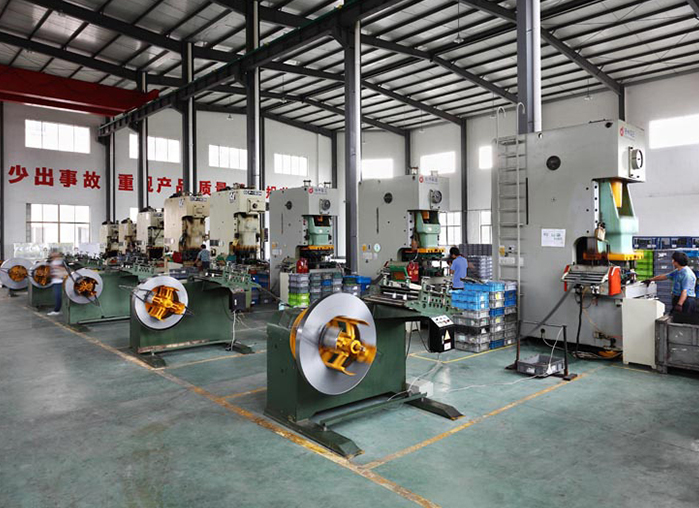
Manufacturing Innovations in Medical Stamping
Medical stamping has evolved significantly due to advancements in technology:
Precision Tooling and Simulation
Modern CAD/CAM systems and simulation software allow engineers to optimize part geometry before production, reducing defects and improving manufacturability.
Micro Stamping Technology
Micro stamping enables production of extremely small components used in minimally invasive surgical tools and implantable devices, where precision is critical.
Automated Inspection Systems
Vision inspection systems and in-line sensors are used to detect defects in real time, ensuring zero-defect manufacturing standards.
Advanced Surface Treatments
Processes such as electroplating, passivation, and coating improve corrosion resistance, wear resistance, and biocompatibility of medical components.
Applications of Medical Stamping
Medical stamping is widely used in the production of critical healthcare components, including:
Surgical staplers and endoscopic tools
Orthopedic and dental components
Cardiac implant parts and connectors
Drug delivery device mechanisms
Diagnostic and imaging system components
Wearable medical device housings
These applications require both mechanical reliability and absolute precision.
Benefits of Medical Stamping
Medical stamping offers several key advantages over traditional machining methods:
High precision and repeatability
Cost-effective mass production
Reduced material waste
Ability to produce complex geometries
Suitable for micro-scale components
High efficiency for large production volumes
These benefits make stamping one of the most efficient manufacturing methods in the medical industry.
Quality Requirements in Medical Stamping
Because medical components are often used in life-critical applications, quality control is extremely strict:
Dimensional accuracy verification
Surface defect inspection
Mechanical strength testing
Biocompatibility validation
Full traceability of production batches
Every component must meet strict regulatory and performance standards before delivery.
Conclusion
Medical stamping plays a vital role in modern healthcare manufacturing by enabling the production of highly precise, reliable, and miniaturized metal components. With advancements in automation, micro-forming technology, and material science, medical stamping continues to drive innovation in surgical instruments, implantable devices, and diagnostic systems.
As medical devices become smaller and more complex, the demand for high-precision stamping solutions will continue to grow, making it an essential technology in the future of medical manufacturing.


