

From design to finished product, Jixing Aluminum provides you with one-stop precision machining solutions!
We would always like to provide the professional technology, highest quality, low price, fastest lead time…
E-mail: lilyfang@jxalu.cn
Tel.: +86 158 4014 9884
Stamping Parts
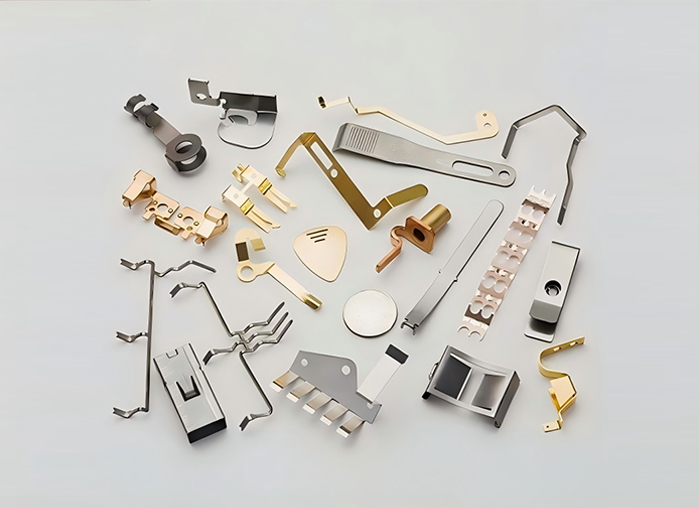
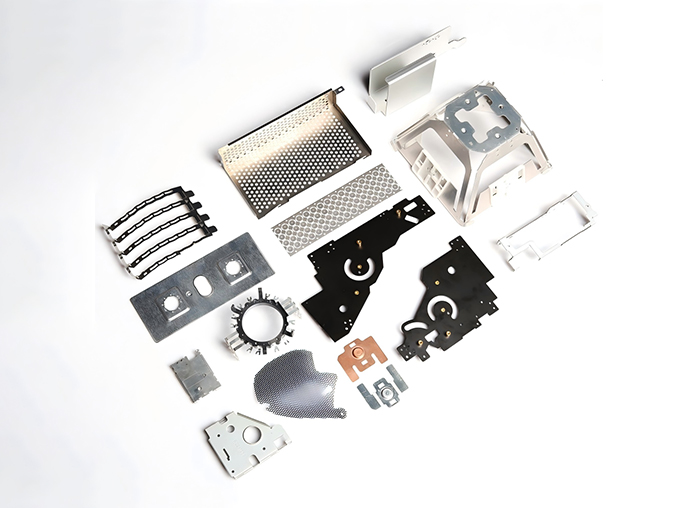
Custom Made Stamping Services
Own factory, online video visit factory
8 project engineers with 20 years experience
Tolerances contorl to ± 0.01mm
9 quality inspection equipment control
Simple components: 3 days prototype machining delivery.
Complex components: 7 days prototype
machining delivery.
MOQ 1 pcs
Stamping Parts
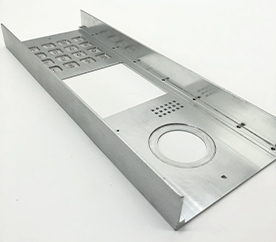
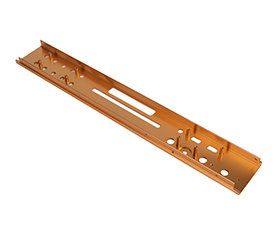
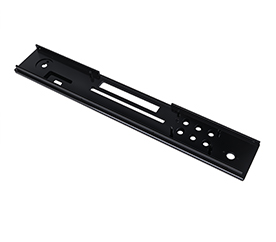
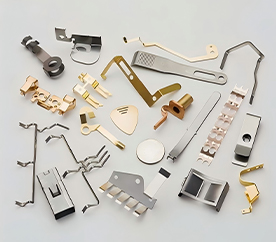
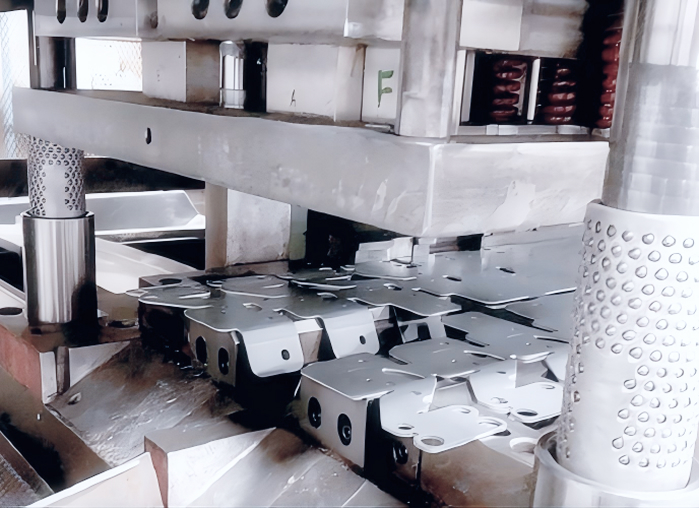
Inquire NowStamping parts are precision components produced by forming metal sheets into desired shapes using stamping presses and specialized dies at room temperature. The process involves operations such as blanking, bending, punching, and drawing, making it suitable for high-volume, high-efficiency manufacturing. Stamping technology is widely used across industries including automotive, electronics, appliances, and industrial machinery.
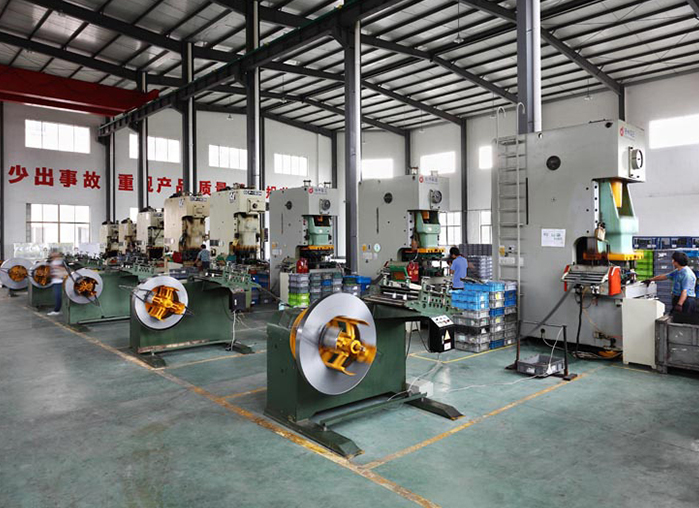
Stamping parts workshop

Workshop
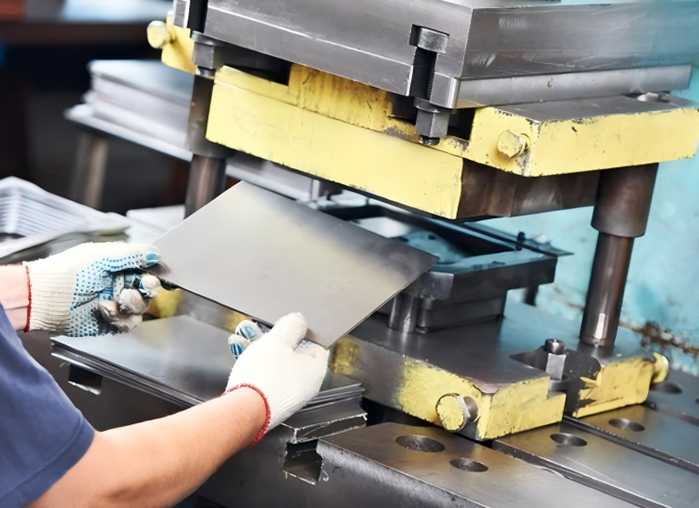
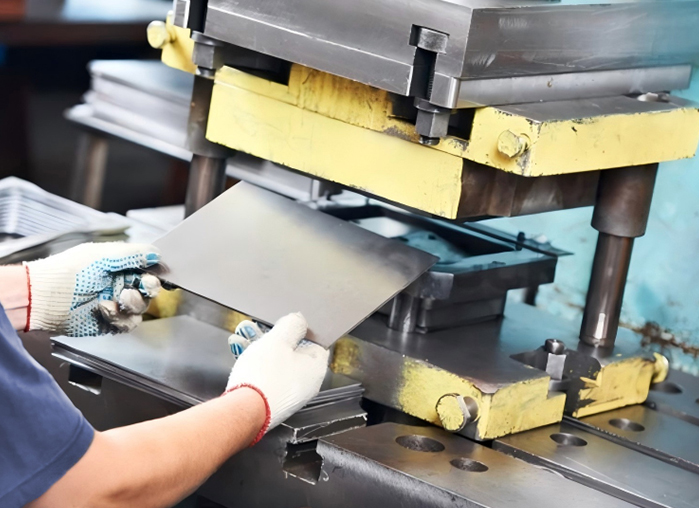
Stamping Close-up
Product Features

High Dimensional Accuracy

High Production Efficiency

Complex Geometry Capability

Cost-Effectiveness

Superior Surface Quality
Technical Specifications
| Parameter Specification Range | Description |
| Material Thickness | 0.2 mm – 8 mm |
| Dimensional Tolerance | ±0.05 mm |
| Maximum Press Force | 10 – 600 Tons |
| Surface Roughness Ra | 1.6 – 3.2 μm |
| Annual Output | ≥ 500,0000 pcs |
| Tooling Life | 300,000 – 1,000,000 cycles+ |
Stamping parts Materials
Here below are some commonly used processing materials, Apart from the materials listed below, if you have any special material requirements, as long as they are available on the market then we can also provide.

Aluminum
Al6061, AI6063, Al6082, AI7075, Al2024, Al5052, ADC12, A380, A384, A413, YL113 etc.
Stainless Steel
201, 202, 301, 303, 304, 304L, 316, 316L, 321, 310S, 401, 409, 410, 420J1, 420J2, 430, 439, 443, 444, G90 etc.
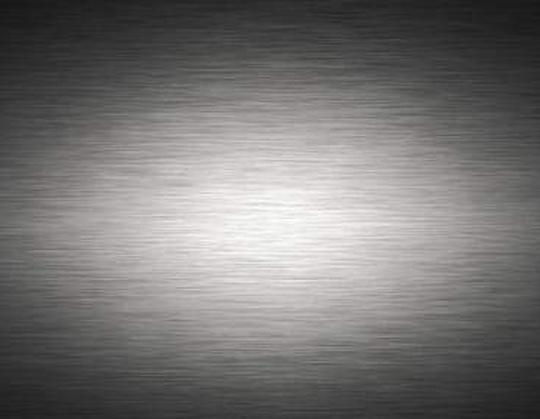
Steel
Mild Steel, Carbon Steel, 4140, 4340, Q235, Q34513, 20#, 45#, etc.
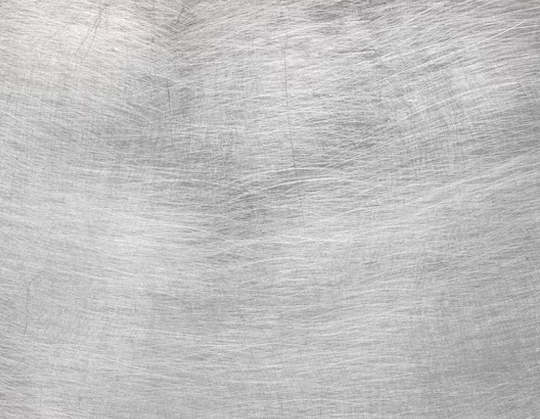
Iron
20#, 45#, Q235, Q345, Q3458, 1214, 12L14, 1215, etc.
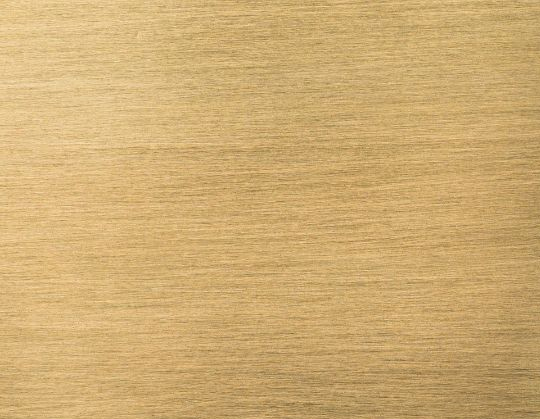
Brass
C35600, C36000, C37700, C37000, C37100, C28000, C26000, C24000, C22000, etc.
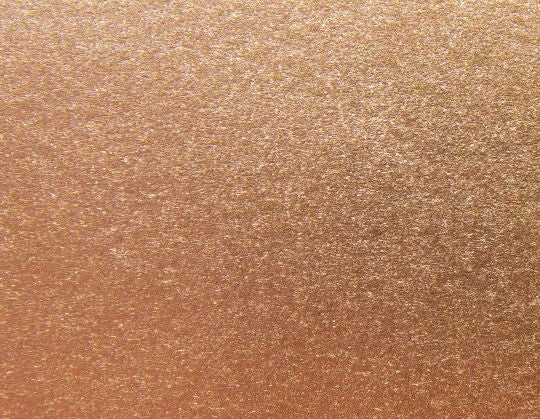
Copper
C11000,C12000,C12200,C10100,etc.
Stamping parts Surface treatment
| Name | Description | Suitable Material | Color | Texture |
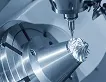
As machined |
Has a As-machined surface roughness of 3.2μm (126 μin), which removes sharp edges and deburs parts cleanly.
|
All metal
|
Mill finished
|
Satin
|
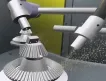
Sand blasting |
A method that uses high-pressure gas or water to spray sand or other fine granular materials onto the surface of a metal machined product, in order to remove dirt or increase the surface roughness.
|
Aluminum, Stainless steel, Steel, Brass, copper
|
Mill finished
|
Matte
|

Anodized |
Anodizing is an electrochemical process, mainly used to form a protective oxide film on the surface of metals (especially aluminum and its alloys). It can effectively prevent metal oxidation and corrosion, enhance wear resistance, and offer a variety of color options to improve aesthetics.
|
Aluminum
|
Silver, black, red, blue, green, yellow, grey, purple, gold, champagne
|
Smooth, matte
|

Alodine |
The Alodine coating is formed on the surface of metals through a chemical reaction, creating a protective oxide film. This film can isolate the metal from air and moisture, thereby enhancing its corrosion resistance.
|
Aluminum
|
Silver, gold
|
Smooth, matte, glossy
|
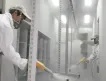
Powder Coating |
The surface of the powder-coated products is smooth and flat, with uniform color. It has extremely strong acid resistance, alkali resistance, impact resistance and wear resistance. It can withstand strong ultraviolet radiation and acid rain for a long time without any phenomena such as coating powdering, fading or peeling. Typical thickness ranging from 50 μm up to 150μm.
|
All metal
|
Any color as required
|
Glossy
|

Polishing |
Polishing is the process of modifying the surface of a workpiece using flexible polishing tools and abrasive particles or other polishing equipment, with the aim of achieving a smooth surface or mirror-like luster. The surface roughness can generally reach Ra 0.8~Ra 0.1.
|
All metal
|
Mill finished
|
Smooth, Glossy
|
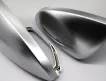
Electroplating |
Electroplating is a process that uses electrolysis to attach a metal film to the surface of metal parts, thereby preventing metal oxidation, improving wear resistance, conductivity, reflectivity, corrosion resistance and enhancing appearance.
|
Aluminum, steel, Stainless steel
|
Glod, Silver, black, red, blue, colorful
|
Smooth, Glossy
|

Wire Drawing |
The wire drawing process involves grinding the product to form lines on the surface of the workpiece, which can reflect the texture of the metal material and achieve a decorative effect.
|
Aluminum, steel, Stainless steel, ABS, brass
|
Glod, Silver, black, grey, bronze, champagne
|
Satin
|
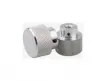
Knurling |
Rolling the handle on metal products or on other working surfaces involves the mechanical process of pressing patterns onto the surface through rolling. It is mainly used for anti-slip purposes.
|
All metal
|
Same as product
|
Matte
|
Painting |
Spray the coating evenly on the surface of the product, then make it to dry and harden, forming a hard coating film. It has the functions of protection, aesthetics and marking.
|
All metal
|
Any color as required
|
Glossy, semi-glossy, highlight, Matte
|
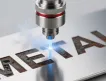
Laser marking |
A marking method that uses a high-energy-density laser to irradiate the surface of product, causing the vaporization of the surface material or a chemical reaction resulting in color change, thereby leaving a permanent mark. It can produce various characters, symbols, and patterns, and the size of the characters can range from millimeters to micrometers, which has special significance for product anti-counterfeiting.
|
All metal
|
As customer required
|
N/A
|
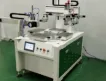
Screen printing |
Screen printing is manufactured through photochemical or mechanical processing. By squeezing the ink and passing it through the screen plate, it is deposited on the surface of the substrate, therefore obtaining a large-area patterned film.
|
Aluminum, steel, Stainless steel,brass
|
As customer required
|
N/A
|
Passivation |
Passivation reactions are widely applied in various industrial fields, such as chemical engineering, aviation, and automobiles. In these fields, passivation reactions can enhance the corrosion resistance, toughness and durability of metals, thereby extending their service life.
|
Aluminum, steel, Stainless steel, brass
|
Gold, Silver, grey, black
|
Smooth, Glossy
|
Types of Stamping
We offer single and multistage, progressive die, deep draw, fourslide, and other stamping methods to ensure the most effective method for manufacturing your products. Jixing experts can match your project with the appropriate stamping by reviewing your uploaded 3D model and technical drawings.
Progressive Die Stamping uses multiple dies and steps to create deeper parts than would typically be achievable through single dies.
It also enables multiple geometries per part as they go through various dies. This technique is best suited to high volume and large parts such as those in the automotive industry. Transfer die stamping is a similar process, except progressive die stamping involves a workpiece attached to a metal strip pulled through the entire process. Transfer die stamping removes the workpiece and moves it along a conveyor.

Deep Draw Stamping creates stampings with deep cavities, like enclosed rectangles.
This process creates rigid pieces since the extreme deformation of the metal compresses its structure into a more crystalline form. Standard draw stamping, which involves shallower dies used to shape the metal, is also commonly utilized.

Fourslide Stamping shapes parts from four axes instead of from one direction.
This method is used to manufacture small intricate parts including electronics components such as phone battery connectors. Offering more design flexibility, lower production costs, and faster manufacturing times, fourslide stamping is popular in aerospace, medical, automotive, and electronics industries.
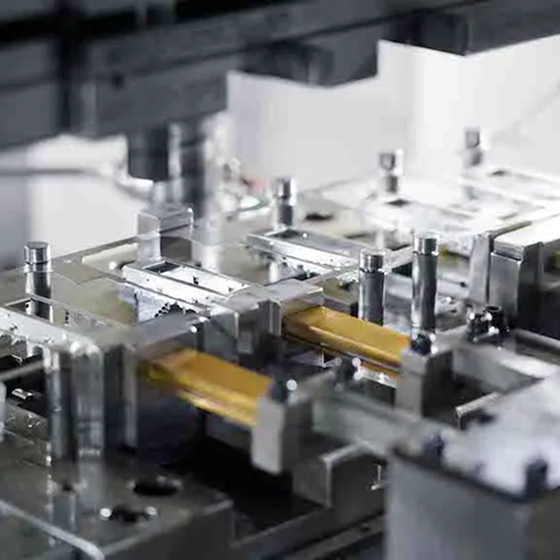
Hydroforming is an evolution of stamping.
Sheets are placed on a die with a bottom shape, while the upper shape is a bladder of oil that fills to high pressure, pressing the metal into the shape of the lower die. Multiple parts can be hydroformed simultaneously. Hydroforming is a quick and accurate technique, though it requires a trim die to cut the parts out of the sheet afterward.
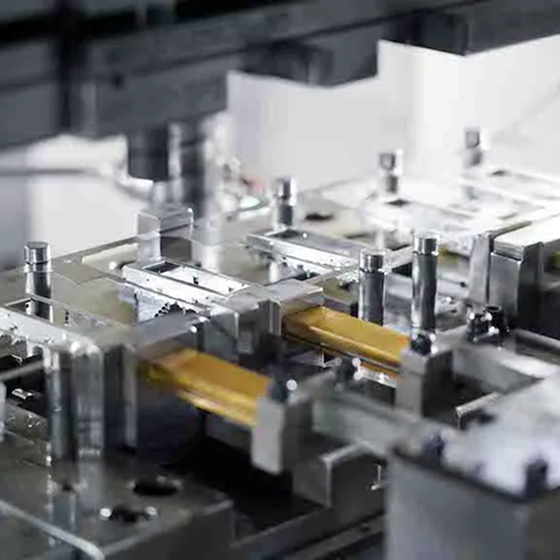
Blanking cuts pieces out from the sheet as an initial step before forming.
Fineblanking, a variation of blanking, makes precise cuts with smooth edges and a flat surface.

Coining is another type of blanking that creates small round workpieces.
Since it involves significant force to form a small piece, it hardens the metal and removes burrs and rough edges.
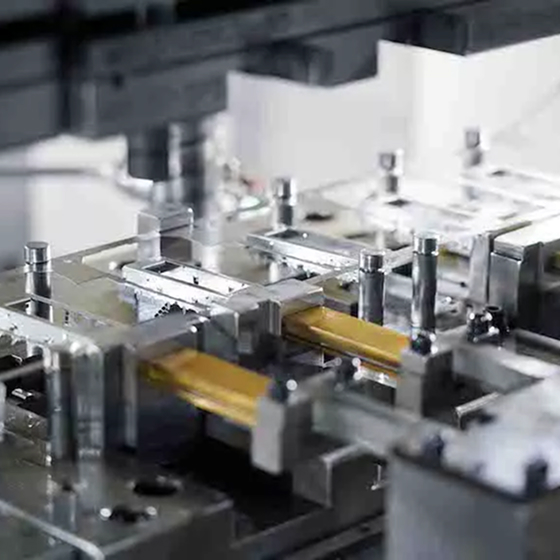
Punching
Punching is the opposite of blanking; it involves removing material from the workpiece instead of removing material to create a workpiece.

Embossing
Embossing creates a three-dimensional design in the metal, either raised above the surface or through a series of depressions.

Application Fields



From design to finished product, Jixing Aluminum provides you with one-stop precision machining solutions!
We would always like to provide the professional technology, highest quality, low price, fastest lead time…